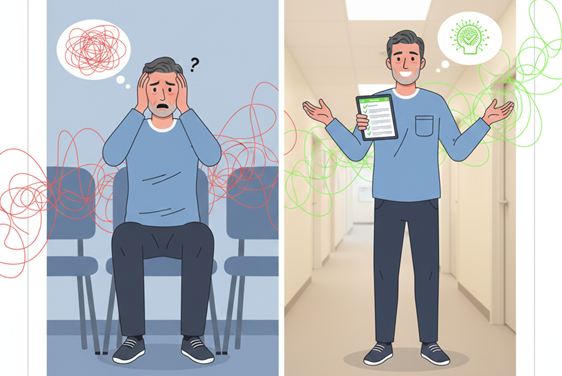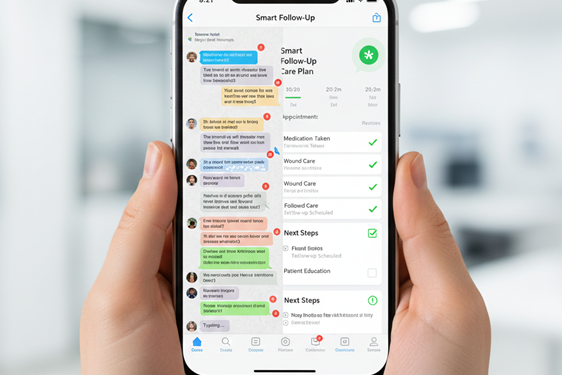
Many hair transplant and plastic surgery clinics rely on WhatsApp for post-operative follow-up. While convenient at first, it quickly turns into a chaotic stream of messages, photos, and voice notes that are difficult to track, prioritize, and manage consistently as patient volume grows.
WhatsApp works well for one-off conversations, but post-op care is a process, not a chat. As clinics grow, several issues emerge.
When follow-up is handled informally, care quality becomes inconsistent. Patients receive different answers depending on who replies and when. Internal knowledge stays trapped in chat history instead of becoming part of a standardized care process.
Structured follow-up replaces endless messaging with a clear recovery framework. Patients are guided step by step, with predefined check-ins and clear expectations.
Moving away from WhatsApp does not mean losing personalization. On the contrary, structured follow-up frees staff from repetitive questions so they can focus on patients who genuinely need reassurance or intervention.
Structured follow-up improves traceability, consistency, and patient confidence. Clinics gain better visibility over recovery progress, reduce staff stress, and create a post-op experience that scales without compromising care quality.
In conclusion, WhatsApp chaos is often a sign of success and growth, but it should not define your post-operative care model. By moving to structured follow-up, clinics can maintain high standards, protect their teams, and deliver a calm, professional recovery journey for every patient.